

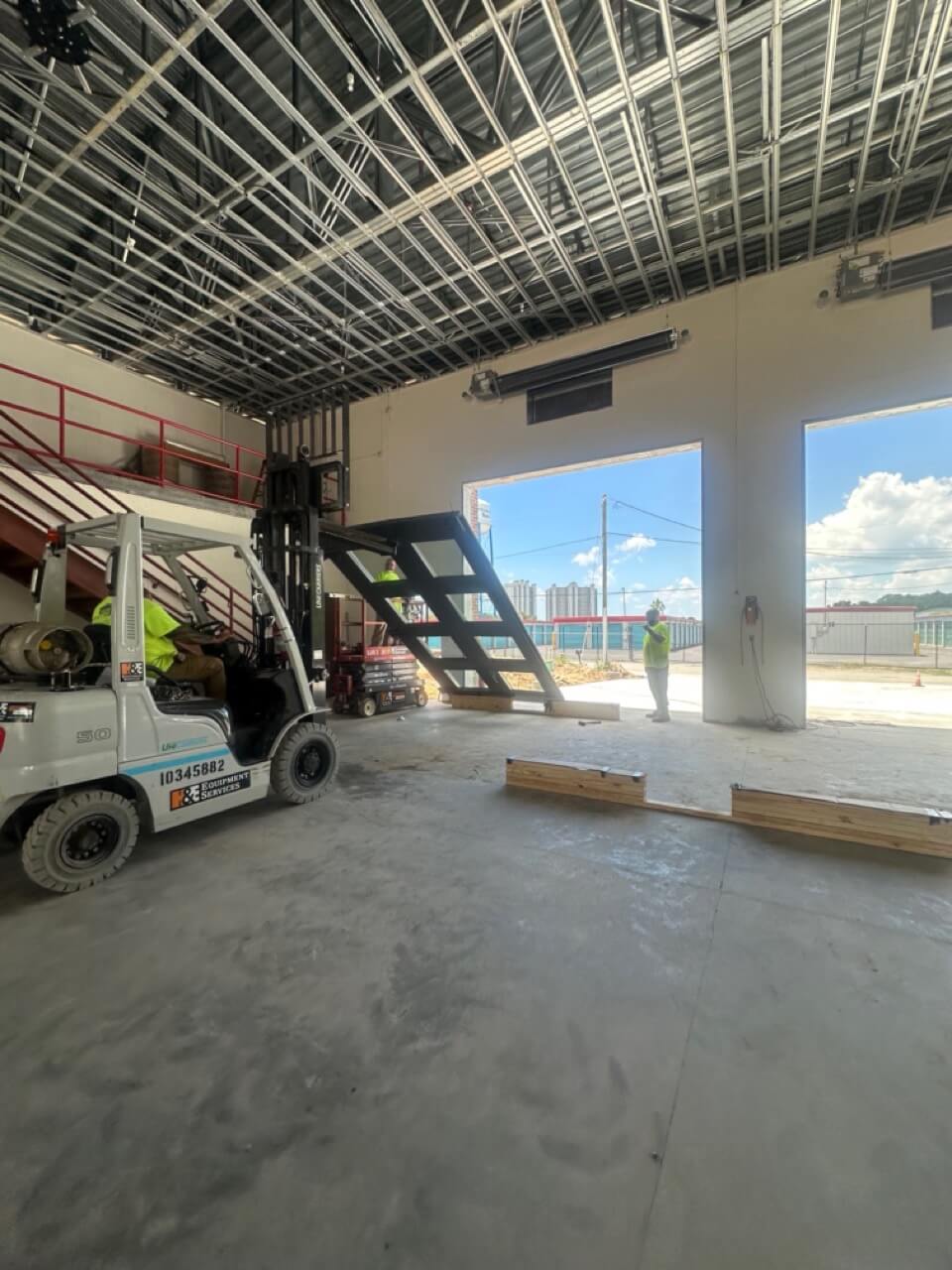
A loading dock leveler bridges the gap between your dock and the trailer bed, creating a smooth transition for forklifts and pallet jacks during loading and unloading operations. Choosing the wrong one means reduced productivity at best and safety hazards at worst. According to Industrial Safety and Hygiene News, roughly 25% of all industrial accidents occur at the loading dock area. The right dock leveler keeps your warehouse running safely and efficiently while preventing equipment damage over time.
Whether you are building a new facility or upgrading existing loading dock equipment, understanding the differences between dock leveler types helps you make a decision that fits your needs and budget. This guide covers everything from edge of dock levelers to hydraulic pit levelers so you can choose the right solution for your operation.
What Is a Loading Dock Leveler?
A dock leveler is a platform installed at the loading dock that compensates for height differences between your dock floor and truck bed or semi-trailer beds. Without one, forklifts would face a dangerous gap or drop-off when moving between the dock and trailer during the loading process, creating serious risk to workers and slowing dock operations.
Unlike simple dock plates, which are flat metal ramps placed manually for light use, dock levelers are permanently installed loading dock equipment designed to handle heavy, repeated use. They feature a hinged deck and lip that extend onto the trailer bed, allowing efficient loading and unloading of cargo across the dock curb. Loading dock levelers come in a variety of sizes and capacities to handle different traffic volumes, load weights, and trailer configurations.
All dock levelers should conform to ANSI MH30.1-2022, the American National Standard that defines performance and testing requirements for dock leveling devices. This standard ensures uniform design criteria across manufacturers and gives facility owners confidence in equipment reliability. Additionally, OSHA 29 CFR 1910.26 requires that dockboards support the maximum intended load and include run-off protection to prevent transfer vehicles from leaving the platform edge.
The two main categories are edge of dock levelers and pit levelers, each suited to different operational demands.
Edge of Dock Levelers
Edge of dock levelers mount directly to the dock face with no pit construction required. This makes installation faster and significantly more affordable upfront. They provide an operating range of about 5 inches above and 5 inches below dock height, which works well when your facility receives trucks with consistent truck bed heights.
Edge-of-dock levelers are ideal for facilities with light to medium loads and limited height variation between the dock and incoming trucks or semi-trailers. Standard capacities range from 20,000 to 35,000 pounds depending on the model. Their compact design means they will not interfere with dock bumpers or existing door hardware, and they operate with minimal impact on your dock curb area.
Types of Edge of Dock Levelers
- Manual Hook-Style: Uses a lifting hook to raise the deck and lip. The most economical edge of dock leveler option with no power source needed. Activation is simple: lift, position, and lower onto the trailer bed.
- Pull-Chain Edge of Dock: A pull chain provides easy activation of the deck. A direct extension spring mechanism provides easy walk-down with no moving parts to wear out. Counterbalance springs assist with raising the platform.
- Hydraulic Edge of Dock: Push-button hydraulic operation with automatic return to stored position when the truck departs. A hydraulic pump and cylinder system raises the deck and extends the lip onto the trailer bed. This type offers the convenience of fully automatic operation without pit construction.
Edge of dock levelers work best for operations handling fewer than 8 trucks per shift with relatively consistent trailer heights. If your facility processes a wide variety of truck sizes or handles heavier cargo, a pit leveler provides greater capability for efficient loading and unloading.
Pit Levelers
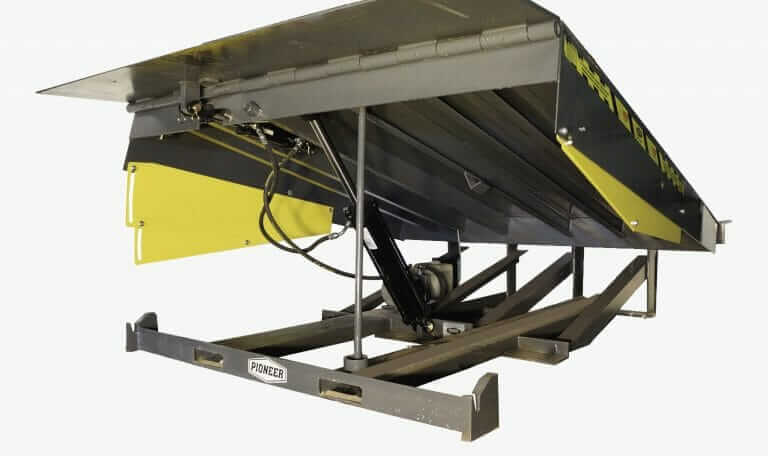
Pit-style dock levelers are recessed into a concrete pit so the deck sits flush with the dock floor when stored. This pit-mounted design provides a much greater operating range, typically 12 inches above and 12 inches below dock height, making them far more versatile for facilities that service different truck and semi-trailer types.
Pit levelers offer higher weight capacities of 25,000 to 45,000 pounds or more and create a smoother transition between dock and trailer. The reduced grade angle means less stress on forklifts and other material handling equipment, which extends their service life and improves productivity. Structural deck support beams welded to a full-width header plate provide durability under heavy, repeated loads.
The tradeoff is higher installation cost since pit-mounted levelers require concrete modification during construction or retrofit. However, for high-traffic dock operations handling heavy loads daily, the reliability and durability of pit levelers makes them more cost-effective long-term.
Vertical Storing Dock Levelers
Vertical storing dock levelers are a specialized type of pit leveler where the deck stores in a vertical position against the wall of the pit when not in use. These levelers are designed for facilities that need environmental control at the loading dock:
- The vertical position allows the overhead door to seal completely against the dock floor, helping prevent energy loss from air infiltration
- Keeps the dock area cleaner by blocking debris, pests, and weather when the dock is not in use
- Provides clear visual confirmation that the leveler is in the safe, stored position
Vertical storing dock levelers are ideal for cold storage, food processing, pharmaceutical, and climate-controlled distribution centers where temperature control matters. They operate hydraulically and offer the same capacity and range as standard pit levelers.
Mechanical, Hydraulic, or Air-Powered Dock Levelers?
Beyond the edge-of-dock vs. pit decision, you will choose between three operating mechanisms for your loading dock leveler:
Mechanical Dock Levelers
Mechanical dock levelers use an extension spring system to counterbalance the weight of the deck. Operation is manual: pull-chain activation raises the platform, and the operator walks the deck down into position on the trailer. A mechanical dock leveler does not require electricity to operate, making it economical to purchase and run. Regular maintenance of the spring mechanism and hinge points is important to keep the leveler functioning properly over time. Best suited for light to moderate traffic volumes where you do not need to operate the leveler more than a few times per shift.
Hydraulic Dock Levelers
Hydraulic dock levelers are fully automatic and the preferred choice for heavy loads and high-traffic facilities. Push-button activation engages the hydraulic pump, which powers a cylinder to raise the deck. Lip extension happens automatically. When the truck departs, the leveler returns to stored position without operator intervention.
Hydraulic operation offers the smoothest transition, highest durability, and lowest long-term maintenance costs. The deck can float with the trailer during loading and unloading, compensating for trailer movement as cargo weight shifts. No safety legs or mechanical hold-downs are needed since the hydraulic system controls descent speed. If your facility needs to operate dock levelers frequently throughout the day, hydraulic is the most reliable and ergonomic choice.
Air-Powered Dock Levelers
Air-powered dock levelers use an inflatable air bag beneath the deck to raise it into position. They are semi-automatic: push-button activation inflates the bag to raise the deck, but lip extension is mechanical. Air-powered models fall between mechanical and hydraulic in both cost and capability, handling moderate traffic loads effectively. The air bag requires periodic inspection as part of routine maintenance to ensure it continues to operate properly.
How to Determine the Right Capacity
Selecting the proper loading dock leveler capacity prevents equipment failure and ensures safe dock operations. Here is a straightforward calculation:
- Add your forklift weight including battery to its maximum lifting capacity. This is your Gross Vehicle Weight or GVW.
- Multiply the GVW by 2 for light to normal use.
- The result is your minimum recommended leveler capacity.
For example, an 8,000 pound forklift carrying a 4,000 pound load has a GVW of 12,000 pounds. Multiplied by 2, you need at least a 24,000 pound capacity dock leveler.
Increase the multiplier if your facility uses lift attachments, three-wheel forklifts, or operates at higher speeds across the leveler. When in doubt, size up. The cost difference between capacity ratings is small compared to the cost of a leveler failure or equipment damage.
Choosing the Right Dock Leveler for Your Operation
Consider these factors when selecting loading dock levelers for your facility:
- Daily truck volume: Light traffic of 1 to 3 trucks per shift works with edge of dock. Moderate to heavy traffic of 4 or more trucks per shift calls for pit levelers with hydraulic operation.
- Trailer height variation: Consistent fleet heights suit edge of dock levelers. Mixed truck and semi-trailer types need the wider range of pit-style levelers.
- Load weights: Under 20,000 pounds with standard forklifts can use basic edge of dock models. Heavier loads demand higher-capacity pit levelers to operate safely.
- Existing construction: Retrofitting an existing dock without a pit makes edge of dock levelers practical. New construction should consider pit installation for maximum flexibility.
- Environmental control: Facilities needing to prevent energy loss from temperature exchange benefit from vertical storing levelers that allow a complete door seal at the dock curb.
- Budget vs. longevity: Edge of dock costs less upfront. Hydraulic pit levelers cost more initially but deliver lower maintenance and longer service life for demanding operations.
Dock Leveler Accessories
Most loading dock levelers can be equipped with accessories that enhance safety and functionality at the dock:
- Dock bumpers: Protect the dock face and leveler from truck impact damage during backing
- Toe guards: Prevent feet from slipping beneath the deck at the sides of the leveler during operation
- Safety lights and communication systems: Signal to truck drivers when it is safe to depart the dock
- Lip keepers: Secure the lip in stored position when the dock leveler is not in use
- Weather seals: Reduce air infiltration around the leveler opening to prevent energy loss at the loading dock
Ask your dock equipment provider about which accessories make sense for your specific unloading and loading requirements.
Common Dock Leveler Problems
Even quality loading dock equipment needs attention over time. Watch for these issues that signal maintenance or replacement needs:
- Deck not holding position or drifting during loading and unloading operations
- Lip not extending fully onto the trailer bed due to worn hinge or bent lip
- Unusual noise during activation or when the leveler starts to operate
- Visible damage to the deck and lip or dock bumpers
- Hydraulic fluid leaks around cylinders or the hydraulic pump
- Difficulty with manual activation from worn extension springs or stuck pull-chain
- Dock leveler not returning to stored position after truck departure
Addressing these problems promptly prevents equipment damage and protects your workers. Regular inspection of your loading dock levelers should be part of your facility’s loading dock safety program.
Frequently Asked Questions
What is the difference between a pit leveler and a dock leveler?
A pit leveler is a type of dock leveler that installs into a recessed concrete pit, sitting flush with the dock floor when stored. It offers a wider operating range of about 12 inches above and below dock height and higher weight capacities than edge of dock models. Edge of dock levelers mount to the dock face without a pit and are more economical but have a limited 5-inch range. Both are dock levelers designed to bridge the gap between your loading dock and trailer, but pit-style models handle more varied trailer heights and heavier loads.
How much does a loading dock leveler cost?
Edge of dock levelers are the most affordable option for basic loading dock operations. Mechanical pit levelers cost more due to the concrete pit construction required for installation. Hydraulic pit levelers carry a higher upfront cost but offer lower long-term maintenance expenses. Vertical storing dock levelers are typically the highest investment. Exact pricing depends on capacity, width, and installation complexity, so contact a dock equipment provider for a quote based on your specific facility needs.
What are the different types of dock levelers?
The main types of loading dock levelers are edge of dock levelers which mount to the dock face, pit-mounted mechanical dock levelers that use spring counterbalance systems, hydraulic dock levelers with push-button automatic operation, air-powered dock levelers that use an air bag lifting mechanism, and vertical storing dock levelers that store upright for environmental control. Each type serves different operational needs based on traffic volume, load weight, trailer height variation, and whether your facility requires temperature control at the dock opening.
What are common dock leveler problems?
The most common dock leveler problems include the deck drifting or not holding position during use, the lip failing to extend fully onto the trailer, hydraulic leaks, unusual noise during operation, and difficulty with manual activation due to worn springs. Most problems result from deferred maintenance. Regular inspection and prompt repairs keep your loading dock levelers operating safely and efficiently.
Get Expert Help Choosing Your Dock Leveler
Southern Door Company carries a full line of dock levelers from Rotary Products, a leading manufacturer of loading dock equipment, including edge of dock models, mechanical pit levelers, and hydraulic pit levelers in a variety of sizes and capacities. We have been helping warehouses, distribution centers, and commercial facilities across southeast Alabama, southwest Georgia, and the Florida Panhandle choose and install the right dock equipment since 1992.
Not sure which dock leveler is right for your facility? Call us at (334) 792-0962 for a free consultation. We will assess your dock operations and recommend the loading dock leveler that fits your traffic volume, load requirements, and budget.