


Dock Seals vs. Shelters: Which is Best for Your Loading Area?
Every open loading dock door is an invitation for rain, wind, heat, and cold to enter your warehouse. In southeast Alabama, that means 95°F summer air pushing humidity into climate-controlled storage, or winter storms soaking the dock floor and creating slip hazards for forklift operators. Dock seals and shelters close the gap between the building wall and the trailer, but they do it in different ways. The right choice depends on your trailer fleet, your product sensitivity, and how your dock operates day to day.
What Is a Dock Seal?
A dock seal is a foam-filled pad system mounted around the dock door opening. The typical setup includes two vertical foam side pads and either a head pad or a drop head curtain across the top. When a trailer is backed into position, it compresses these foam pads against the sides of the trailer, creating a tight seal around three sides of the truck.
Dock bumpers control how far the trailer pushes into the seal. Properly sized, the seal projects about 4 to 6 inches beyond the bumpers. That gives enough material to close the gap between the dock and the trailer without crushing the foam flat.
Rotary Products, the manufacturer Southern Door Company carries for all dock equipment, has been building compression dock seals for over 35 years. Their seals include ventilation holes that allow fast air escape when the truck backs in and quick recovery when it pulls out. Without proper venting, foam pads resist compression unevenly, which leads to premature breakdown and poor seal contact.
Material choices affect both durability and workmanship. Rotary Products offers seal coverings in 22 oz. vinyl, 40 oz. vinyl, 40 oz. high tear duroprene, and 40 oz. Hypalon, each suited to different levels of dock traffic and weather exposure.
Compression Seal Configurations
The right dock seal model depends on your door openings and the trailers you receive.
Standard compression seals (Rotary’s C-Series) fit door openings up to 8 feet wide. For wider doors of 9 to 10 feet, Rotary’s Z-Series Super Wedge design uses an angled foam profile that maintains seal contact across the broader opening.
Header options vary with door height. Smaller doors (8′ x 8′) typically use an 18-inch head pad that compresses against the top of the trailer. Taller doors (8′ x 10′ or larger) work better with a curtain-style header that drops down to meet the trailer roof, accounting for the extra space above the truck.
Custom projections range from 8 to 21 inches in 1-inch increments, so the seal can be built to match your specific dock height, driveway approach grade, and trailer fleet dimensions.
What Is a Dock Shelter?
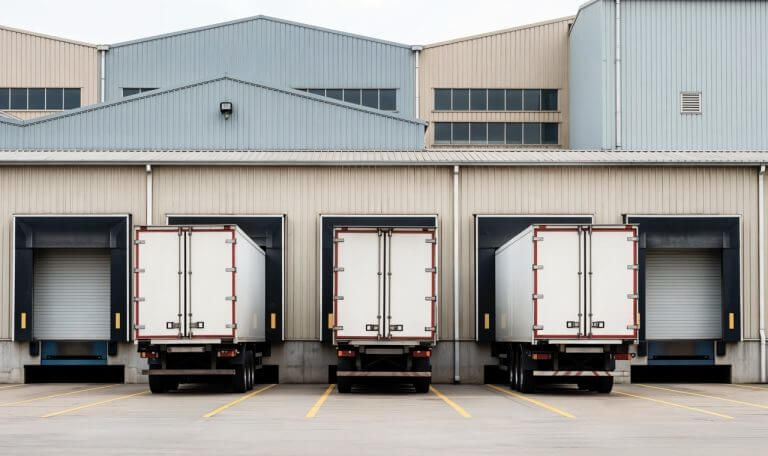
A dock shelter works on a different principle. Instead of compressing against the trailer, a shelter is a three-sided rigid frame assembly that projects outward from the building wall, typically about 24 inches. The frame holds flexible fabric curtains reinforced with spring steel stays. When a trailer backs through these curtains, they create a brush-style wiper seal along the top and sides of the truck.
Because the shelter’s curtains seal against the sides and top of the trailer rather than the back, dock workers get full access to the back of the trailer with the doors open. Nothing intrudes into the loading space. Forklifts can drive straight in and out without foam pads narrowing the doorway.
Rigid Frame Shelters
Rotary Products’ rigid frame shelters use preservative-treated lumber frames with six support trusses per side. Most manufacturers only use four. Steel angle brackets reinforce every corner of the frame, built for lasting strength in high-wind areas and heavy daily use.
The frames are covered with translucent light panels that let natural light into the dock area during daytime loading and unloading, reducing the need for additional overhead lighting.
The header frame slopes 2 inches to direct water runoff away from the dock door, keeping rain and snowmelt from pooling on top of the shelter and dripping into the loading area.
Soft Sided Shelters
Rotary Products also builds soft sided shelters that replace the rigid wood side frames with high-density polyurethane foam (minimum 1.5 lbs density, 45 lbs compression rating) covered in vinyl. If a driver mis-spots the trailer, the flexible sides absorb the impact and return to shape without damage. The side curtains attach with a touch-and-hold fastening system that allows removal and replacement without tools, which cuts maintenance downtime.
Both shelter types use 40 oz. per square yard vinyl-coated nylon with high tear duroprene at the high-wear contact points. Spring steel stays inside the curtains maintain shape and create the wiping action that forms the seal against the trailer. Yellow guide stripes on the curtains help drivers align trailers accurately.
Dock Seals vs. Dock Shelters: The Practical Differences
Picking between a dock seal or shelter comes down to four factors: how tight the seal needs to be, what trailers show up at your dock, how much trailer access you need, and what the project costs over time.
Seal Tightness and Loading Dock Weather Protection
Dock seals win on raw sealing performance. The compression design creates an airtight barrier with minimal gaps. This directly reduces heating and cooling costs and keeps conditioned air inside the warehouse. For cold storage, food processing, and pharmaceutical distribution, that tight seal protects products from outside contaminants and temperature swings that cause spoilage or compliance failures.
Building energy codes back this up. ASHRAE 90.1-2016 requires weather seals on loading dock doors in the colder climate zones (4 through 8), and several states now require dock seals or shelters on any dock door adjacent to conditioned spaces. The goal is reducing energy loss from air infiltration when trailers are docked but the overhead door is open.
Dock shelters historically left gaps. The biggest problem areas are the trailer door hinge gaps (roughly 2.5 square feet of open space per dock position) and the corners where side curtains meet the header. Newer shelter designs have addressed much of this. Weighted head curtains improve the seal across the top of the trailer, and bottom corner pillows (Rotary Products constructs theirs from polyurethane foam in vinyl-coated nylon) plug the lower corner gaps where shelters traditionally allowed air exchange.
For facilities that need maximum dock protection and full environmental control with a variety of trailer sizes, inflatable dock shelters offer a third path. These include inflatable side bags and an inflatable head curtain that contour tightly to the sides, corners, and top of the truck when activated. You get near-seal-level tightness with the trailer access benefits of a standard shelter. Inflatable models cost more, but for temperature-sensitive operations handling mixed fleets, they bridge the gap between seals and shelters.
Trailer Compatibility
This is where shelters pull ahead. If your facility receives trailers from multiple carriers, rental fleets, or a mix of trailer widths and heights, a dock shelter handles the variation without any adjustment. The flexible curtains conform to whatever backs through them.
Dock seals work best when the same trailer sizes show up consistently. A seal built for one width will compress unevenly against a narrower trailer, leaving gaps along the sides. An oversized trailer can over-compress the foam, accelerating wear and reducing the seal’s recovery ability.
For distribution centers in the Wiregrass region that receive shipments from a variety of trailer types and carriers, this flexibility often tips the decision toward shelters.
Forklift and Trailer Access
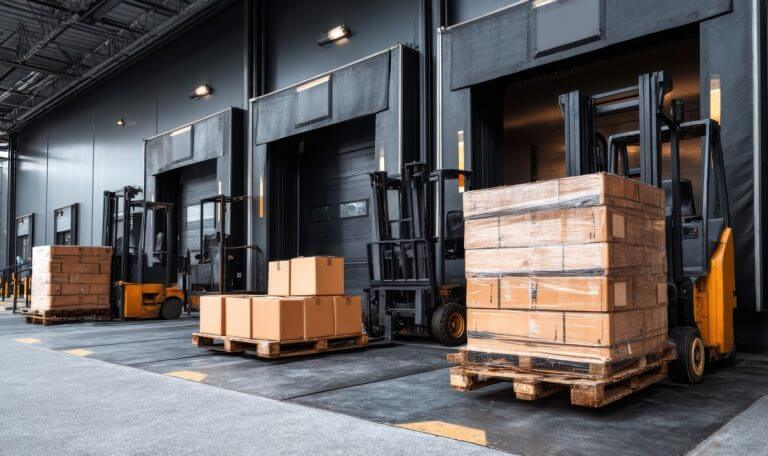
Dock shelters provide full, unobstructed trailer access for loading and unloading. Because the seal effect happens at the sides and top of the truck, the entire rear of the trailer stays clear. Forklifts drive straight in and out without foam pads crowding the doorway.
Compression dock seals push foam and fabric into the trailer opening when the truck compresses against them. On standard 8-foot-wide dock doors, this can reduce the usable opening by several inches on each side. For operations moving full pallets or oversized freight, that lost clearance slows loading times or forces manual handling where a forklift should fit.
This is one of the primary reasons Rotary Products’ custom-built shelters exist: they allow full access to docked trailers, with no space lost from pad overlap at the truck opening.
Cost: Upfront vs. Long-Term
Dock seals cost less to buy and install. For facilities watching initial budgets, that matters.
The long-term math favors shelters in high-traffic applications, though. Compression seals take abuse from every truck that backs in. The foam compresses and decompresses thousands of times per year, and the fabric face grinds against the trailer body as the truck bed shifts during loading. Wear pleats (shingle-style fabric overlays on the foam side pads) help extend life by moving up and down with the truck bed rather than abrading against it. Even with wear pleats, high-traffic docks may need seal replacement every few years.
Shelters last longer because there’s less direct compression stress. The curtains wipe against the trailer rather than being crushed by it. For docks processing 20 or more trailers per day at a single position, the reduced replacement frequency and lower downtime make shelters the better financial decision over a five-to-ten year window.
When Dock Seals Are the Right Choice
Your facility receives the same trailer type consistently. A dedicated fleet or single-carrier arrangement keeps the seal dimensions matched to the trucks that dock every day.
Energy efficiency and temperature control come first. Cold storage, frozen food distribution, and pharmaceutical warehouses need the tightest possible seal to provide maximum protection for products and reduce energy loss from heating and cooling the dock area.
Exterior space is limited. Dock seals sit closer to the building wall than shelters, which project 18 to 24 inches outward. If your loading dock sits close to a property line, drive aisle, or adjacent dock door, seals may be the only option that physically fits.
Traffic volume is moderate. A dock running fewer than 10 trucks per day will get solid service life from a well-built compression seal, and the lower upfront cost makes financial sense at that volume.
When Dock Shelters Make More Sense
Multiple trailer sizes and types show up at your dock. Distribution centers, third-party logistics facilities, and retail receiving docks see trailers of varying widths and heights from dozens of carriers. A shelter handles that variation without compromise.
Full trailer access matters for efficient loading. If you run forklifts with wide loads, pull full pallets, or unload with clamp trucks, the unobstructed opening of a dock shelter keeps throughput high.
Dock traffic is heavy. Twenty or more trailers per dock position per day will wear through compression seals faster than shelters, increasing both replacement costs and dock downtime.
You need loading dock weather protection without maximum compression. For operations that don’t require airtight climate control but still need to keep rain, wind, ice, and snow out of the dock area, shelters provide effective sealing at a lower maintenance burden.
Maintenance for Dock Seals and Shelters
No dock seal or shelter runs forever without attention. Regular inspection catches problems before they become expensive.
For compression dock seals: check the foam for permanent compression. Foam that doesn’t spring back after the trailer leaves has lost its sealing ability and needs replacement. Inspect the fabric covering for tears, especially at the bottom of the side pads where trailer hardware contact is heaviest. Look for gaps between the head pad or head curtain and the trailer roof. If your seals have wear pleats, verify the pleats are still attached and moving freely. Worn or missing pleats speed up abrasion damage on the seal face.
For dock shelters: inspect the spring steel stays inside the curtains. Bent or broken stays prevent the curtain from keeping proper contact against the trailer. Check the header frame for water drainage (debris can block the 2-inch slope that directs runoff). Examine the curtain fabric at the duroprene-reinforced high-wear zones. For soft sided models, verify the foam sides return to shape after trailer contact and that the touch-and-hold fastening system still holds securely.
Both types benefit from keeping the dock area clean. Salt, debris, and ice buildup around the base of seals and shelters accelerate wear on foam and fabric. Our loading dock safety guide covers inspection schedules and housekeeping practices that help all your dock equipment last longer.
Choosing the Right Setup for Your Dock
Some facilities use both dock seals and dock shelters on the same building: compression seals on positions dedicated to a single carrier’s fleet, and shelters on positions that receive mixed trailer traffic. The dock equipment that works for a cold storage warehouse in Ozark won’t match what a distribution center in Panama City Beach needs.
The variables that matter most are your trailer fleet consistency, the temperature sensitivity of what you’re storing or moving, your daily dock traffic volume, and whether you’re prioritizing short-term cost or long-term total cost of ownership.
If you’re also considering a dock leveler upgrade, plan both projects together. The leveler height, pit configuration, and bumper placement all affect how your dock seal or shelter fits and performs.
Southern Door Company has installed and serviced dock seals and shelters across the Wiregrass region since 1992. We carry the full Rotary Products line of compression seals, rigid frame shelters, and soft sided shelters, each custom-built to your dock’s exact dimensions and traffic patterns. Call us to walk through your dock layout, trailer fleet, and operational requirements. We’ll help you find the right fit for your facility.